
Get Your Lead Follow-Up Right Before Automating It
Automation is most useful when the next step is already clear. If your team does not know who should respond to a new enquiry, adding more messages can make the confusion happen faster.
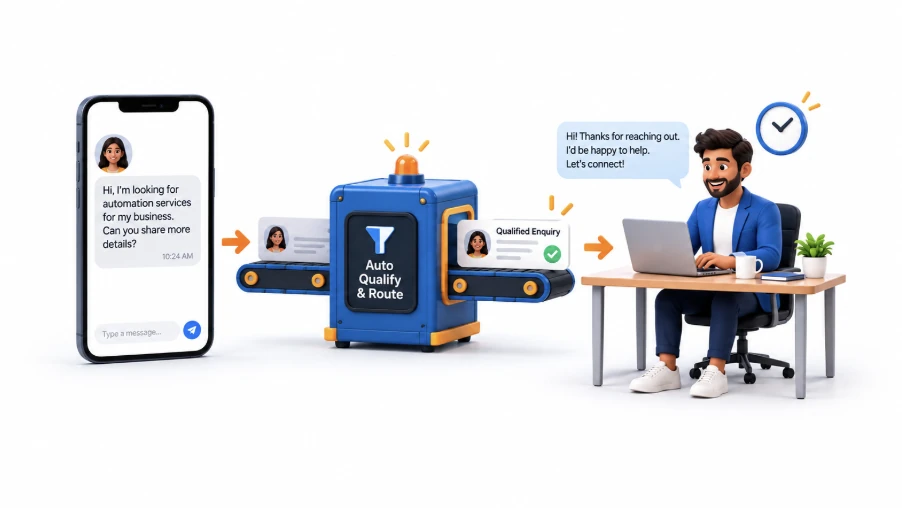
Map where enquiries arrive
List the channels customers currently use: website forms, calls, WhatsApp, email, and advertising lead forms. Check how each enquiry reaches a person who can help.
The first improvement may be a shared record and a clear owner, not a chatbot. A simple process your team can follow is a better starting point than several disconnected tools.
Define the first useful response
An acknowledgement can tell someone their message arrived. It should not pretend a team member has already reviewed the request or promise a time your business cannot meet.
- Identify who owns the enquiry and who covers their absence.
- Ask only the questions needed to route the request.
- Keep business hours and response expectations clear.
- Give the customer a way to reach a person.
Automate repetitive work, keep judgement human
Lead capture, internal alerts, record updates, and follow-up reminders can reduce repetitive administration. Decisions about suitability, pricing, complaints, or unusual requests should have an appropriate human handoff.
Messaging must respect the customer's choices and the requirements of the channel. Do not turn an enquiry into repeated promotional messages that the person did not ask for.
Test the exceptions before expanding
Try duplicate enquiries, incomplete contact details, out-of-hours requests, delivery failures, and a request to stop receiving messages. Check that the team can see failures and recover without losing the original enquiry.
After launch, review missed enquiries, response gaps, and the usefulness of the handoff. The goal is a more reliable customer conversation, not simply a larger number of automated messages.
Explore AI Automation
See how we approach this work and when it may help your business.
Explore the Service